Stop paying for compliance. Start investing in strategy.
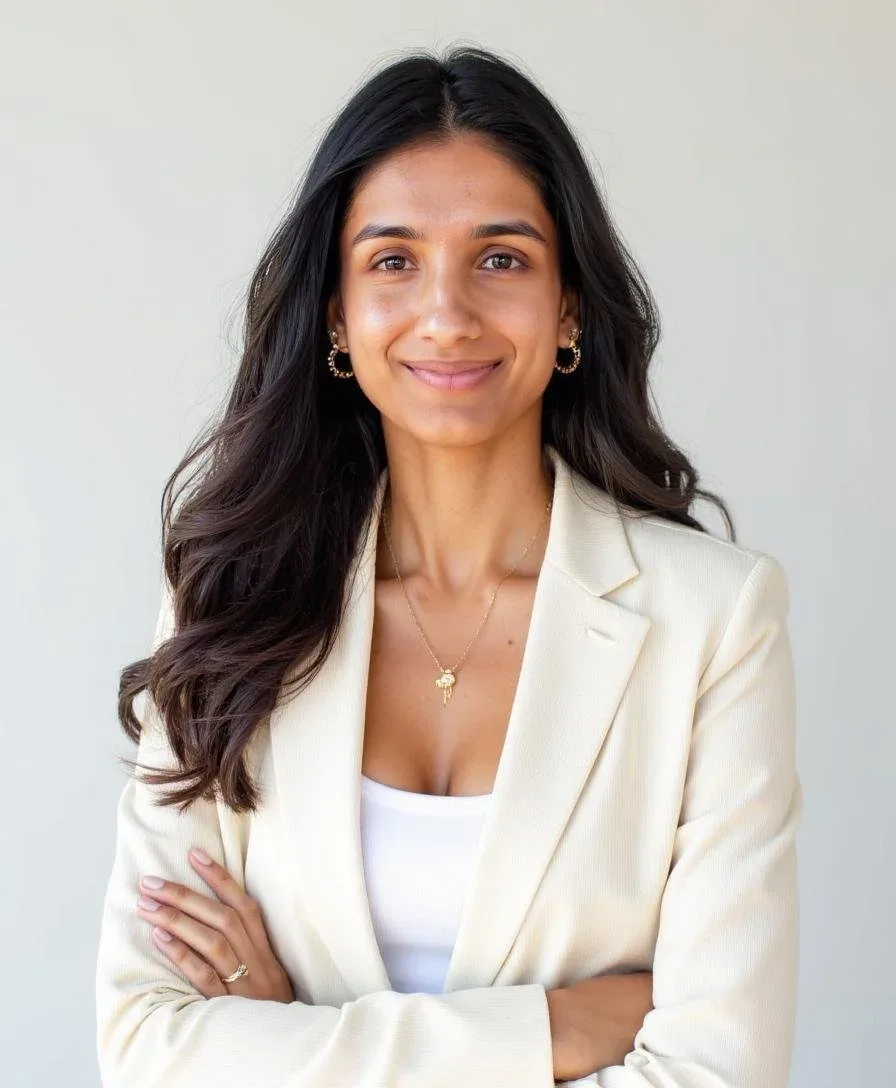
Bookkeeping, controller and fractional CFO support for owner-led businesses, and year-round tax strategy for owners and real estate investors. You work directly with Akansha Acharya, a CPA with more than five years in tax.
Akansha Acharya, CPA · Licensed in Washington State · Serving clients nationwide
Two ways to work with us
Use either on its own or combine them. Clean books and a tax plan built on those books is where the biggest results come from.
Monthly, from $1,000
Financial Operations
Bookkeeping, controller and fractional CFO support for owner-led businesses doing $500k to $10M. Every month you'll know where the cash is, what's making money and what to do next.
- Monthly close and a one-page Clarity Note
- 13-week cash forecast and budget vs. actual
- CFO-level planning when you need it
Year-round, from $2,997
Tax Strategy
Written tax plans for owners, real estate investors and high earners, built on your real numbers and reviewed with you through the year.
- Entity, S corp and owner pay strategy
- Cost segregation, REPS, STR and 1031 planning
- Quarterly projections and year-end moves
Who we work with
Owner-led businesses doing roughly $500k to $10M, where the founder still runs the work, and investors who want a real tax plan.
Creative & media businesses
- Creative and marketing agencies
- Production and post-production studios
- Talent and creator-led companies
- Media and entertainment brands
Health & wellness practices
- Medical and specialty practices
- Dental and orthodontic practices
- Therapy, counseling and mental health groups
- Chiropractic and physical therapy clinics
Professional & expert services
- Consulting and advisory firms
- Coaches, educators and course businesses
- IT, software services and tech consultancies
- Engineering and technical services firms
Construction & skilled trades
- General and specialty contractors
- Remodelers and custom builders
- HVAC, plumbing and electrical companies
- Landscaping and outdoor services
Real estate investors
- Long-term rental portfolios
- Short-term rentals (Airbnb, VRBO)
- Investors pursuing real estate professional status
- BRRRR and value-add investors
Somewhere else?
If you run your own business and want to understand your numbers, book a call. We'll tell you honestly whether we're the right fit.
Who's a good fitWhat the first 90 days look like
Records brought to standard
Year-to-date activity reconciled, categories fixed and a chart of accounts set up for decisions and for taxes.
A tax plan built on your numbers
Entity review, deduction mapping and a written plan with specific actions and dates.
Reporting you can use
Budget vs. actual and a 13-week cash view, so you know where the business stands.
A steady rhythm
Scheduled reviews, set response times and a clear action list after every meeting.
Free tax calculators
Built on 2026 federal tax law. No email required.
S Corp Savings Calculator
Default LLC vs. S corp, with 2026 payroll tax, QBI and real costs
OpenQuarterly Estimated Tax Calculator
Your 2026 payment and due dates, using the IRS safe harbor
OpenSolo 401(k) & SEP‑IRA Calculator
How much you can put away in 2026, and what it saves
OpenRental Property Depreciation Calculator
Annual and first-year deductions on a residential rental
OpenAbout Akansha Acharya, CPA
Akansha works with owners and investors who want clean books, steadier cash flow and a tax plan that matches how they build wealth. That means structuring the business correctly, seeing what's really happening in the numbers, and making decisions with confidence.
- More than five years in tax, four of them at Deloitte
- MS in Business Analytics, University of Denver
- Bachelor's degrees in accounting and economics
- Published research on AI in tax practice and on immigrant entrepreneurship
Guides for owners and investors
All guidesGuide · 12 min read
The Complete S Corp Election Guide for 2026
How an S corp election saves tax in 2026, when it's worth it, how to set a reasonable salary, how it interacts with the QBI deduction, and how to file Form 2553 on time.
ReadGuide · 12 min read
Real Estate Investor Tax Guide 2026: The Strategies Most Investors Miss
Cost segregation, bonus depreciation, real estate professional status, short-term rentals, 1031 exchanges, entity structure and QBI for rental real estate, updated for 2026.
ReadCalendar · 4 min read
2026 Federal Tax Deadlines for Small Business Owners
Every key federal tax date for 2026 in one calendar: estimated taxes, W-2 and 1099 deadlines, partnership and S corp returns, individual and C corp returns, extensions and payroll filings.
ReadFrequently asked questions
What is the difference between a bookkeeper, a controller and a fractional CFO?
A bookkeeper records what happened: transactions, reconciliations and statements. A controller makes sure those numbers are right, on time and under control: a monthly close by a deadline, reviewed reconciliations, payroll and sales tax oversight, and a cash forecast. A fractional CFO uses the numbers to decide what happens next: forecasting, pricing, cash strategy, lender and investor work, and tax strategy.
Which businesses do you work with for monthly accounting?
Owner-led businesses doing roughly $500,000 to $10 million a year, in four groups: creative and media businesses (agencies, studios, talent and media brands), health and wellness practices (medical, dental, therapy and wellness), professional and expert services (consultants, coaches, tech and engineering firms) and construction and skilled trades (contractors and home services). If you're owner-led and want to understand your numbers, we're happy to talk even if you don't fit neatly into one of these.
Do you work with businesses making under $250,000?
Yes, through one-time and annual services rather than a monthly retainer. Smaller businesses usually get the most value from tax preparation, the Foundation tax plan or a Clarity Diagnostic. When revenue grows past about $250,000, monthly support starts to pay for itself.
Do you prepare tax returns, and what do they cost?
Yes. Individual returns (Form 1040) start at $750 and business returns (1120-S, 1065, 1120) start at $1,500. The final fee depends on complexity, such as the number of schedules, rental properties or states. You can hire us for a return on its own or alongside a tax plan or monthly engagement.
Do you bill hourly?
No. Every engagement has a fixed fee quoted up front. Monthly services are month-to-month, and tax strategy plans are annual and can be billed monthly.
Book a free 30-minute call
Tell us what your numbers are doing and what's worrying you. You'll leave knowing what to do next, whether or not we work together.